

What is driving the advances in therapeutic vaccines and why scaling this innovation remains a global challenge
09/12/2025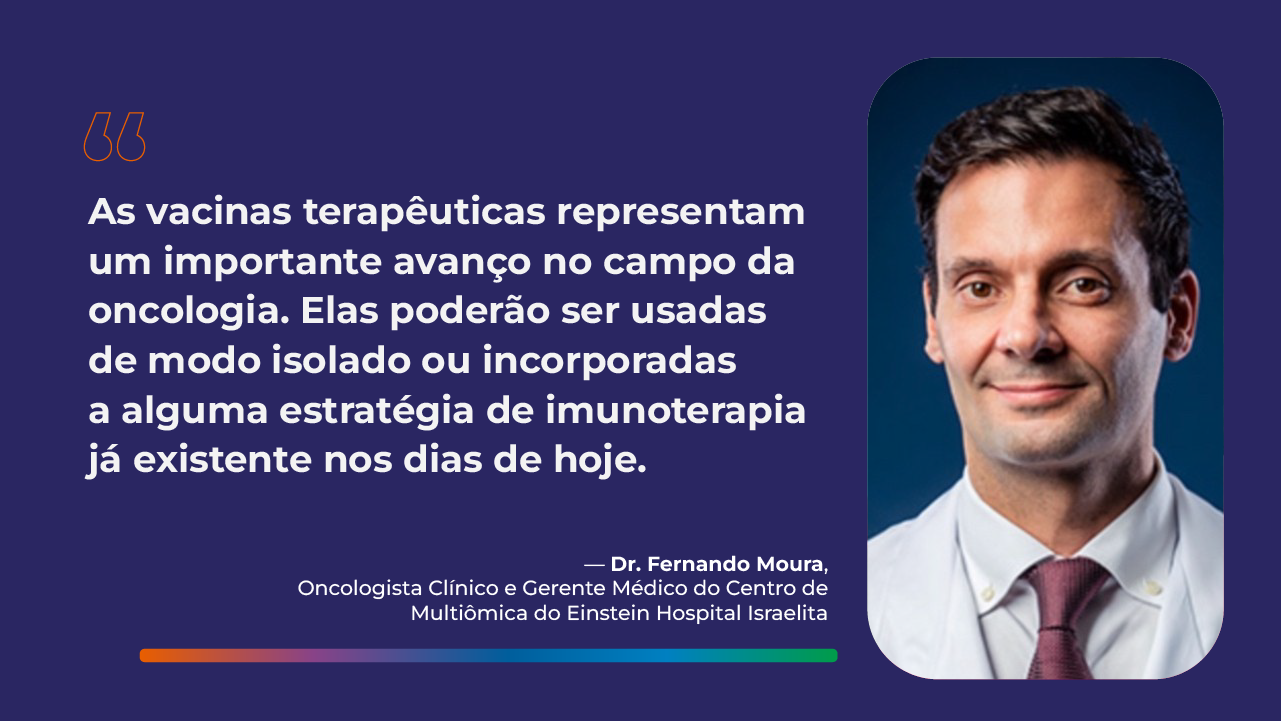
In recent years, therapeutic mRNA vaccines for cancer treatment have moved from a distant promise to one of the most exciting frontiers in medicine. Unlike traditional vaccines, which prevent disease, therapeutic vaccines treat patients who have already been diagnosed by stimulating the immune system to recognize and fight diseased cells, such as tumor cells.
The latest results have drawn significant attention: studies combining personalized vaccines with immunotherapies have shown meaningful reductions in the risk of recurrence in melanoma patients¹ and are beginning to show promising results in other tumor types as well². However, turning this promise into clinical reality—and especially producing these vaccines at scale—remains a major challenge.
The Dilemma Between Scale and Personalization
There are two main approaches to developing therapeutic vaccines: the so-called “off-the-shelf” versions, produced at large scale and identical for multiple patients, containing antigens common to different tumor types³; and personalized vaccines, created specifically based on the unique mutations of each patient⁴.
Personalized vaccines often generate stronger and more precise immune responses, but each one is literally a unique product—adding complexity (and cost) to the entire process⁵.
For this reason, companies are attempting to balance both models: standardizing industrial processes (the “how” vaccines are produced) while personalizing only the genetic content (the “what” goes inside the vaccine).
In Manufacturing, Time Is the Biggest Enemy
Producing a personalized vaccine is far from simple. The process begins with a tumor biopsy, which is genetically sequenced to identify the patient’s mutations. These data then undergo bioinformatic analysis to determine the best immune “targets.” From there, the RNA is produced, encapsulated, and tested before administration.
Even with advanced technology, this entire cycle can take several weeks—far too long for patients undergoing active treatment⁶.
Furthermore, every stage must comply with good manufacturing practice standards, requiring strict control of sterility, traceability, and quality⁷, which slows down and increases the cost of production.
Research centers and companies have tested various ways to accelerate manufacturing, including modular factories, automated production lines, and faster quality-control methods⁸. Still, reducing the time from sample collection to vaccine administration remains one of the most significant bottlenecks.
Personalization Is Expensive and Requires Reliable Data
Producing a personalized vaccine means dealing with large volumes of genetic data. The quality of the biopsy, the ability to identify relevant mutations, and the precision of algorithms predicting immune response are all critical factors⁴.
In addition, the cost is high. Each dose requires a unique manufacturing process, which complicates large-scale adoption and creates reimbursement and pricing challenges for health systems⁹.
Regulators Must Also Adapt
Another barrier is the regulatory environment. Current regulations were designed for traditional medicines and vaccines—not for products in which each patient has their own formula. Agencies such as the FDA and EMA are already discussing the creation of “regulatory platforms,” in which the production process—not each individual RNA sequence—is approved⁷. This would allow personalized vaccines to reach patients more quickly and safely.
What Is Working Best
Some strategies have shown encouraging results:
-
Automation and modularization of manufacturing facilities, enabling multiple small batches to be produced in parallel⁸.
-
Use of fixed platforms (standardized equipment, reagents, and protocols), varying only the genetic content¹⁰.
-
Full digital integration of the production chain to ensure complete traceability of each sample.
-
Collaboration among companies, hospitals, and startups to reduce bottlenecks and share infrastructure.
Beyond Cancer
Although the current focus is oncology, therapeutic vaccines are also being investigated for chronic infectious diseases and even autoimmune conditions. And within oncology, there is still an important path ahead for clinical and regulatory maturation.
In this context, explains Dr. Fernando Moura, Medical Manager of Precision Medicine at Einstein, these vaccines may be used both alone and in combination with immunotherapies already adopted in clinical practice:
“Although still limited to research and clinical studies, therapeutic vaccines represent an important advance in the field of oncology. They may be used alone or incorporated into existing immunotherapy strategies.”
According to him, the progress may be especially relevant for patients treated with curative intent—for example, after surgery:
“In the postoperative setting, these vaccines may help the immune system remain vigilant, contributing to a reduced risk of recurrence and therefore potentially increasing the chances of cure.”
From Innovation to Validation: What Comes Next
Therapeutic vaccines represent one of the most promising intersections of immunology, biotechnology, and personalized medicine. But for this progress to reach patients broadly, we need to rethink how new therapies are developed, tested, and validated.
We are witnessing a profound paradigm shift—from the model of “one drug for millions” to “one treatment for each patient.” Making this level of personalization scalable is the next major challenge for the healthcare industry.
Advancing in this direction depends on something essential: validating each technology under real-world conditions, ensuring safety, efficacy, and feasibility. This is where the Eretz.bio Technology Validation Office plays a key role, combining scientific rigor, market insight, and patient-centered focus to transform innovation into practical value for healthcare.
References
-
Cancer Today Magazine. Cancer vaccines show promise in early trials. (2024). Available at: https://www.cancertodaymag.org/cancer-talk/cancer-vaccines-show-promise-in-early-trials
-
Exploration of Immunology. Neoantigen-based cancer vaccines: progress and challenges. (2024). Available at: https://www.explorationpub.com/Journals/ei/Article/1003190
-
Cancer Today Magazine. Cancer vaccines show promise in early trials. (2024).
-
Exploration of Immunology. Neoantigen-based cancer vaccines: progress and challenges. (2024).
-
Journal of Hematology & Oncology. Personalized cancer vaccines: current landscape and future direction. (2025).
-
PMC – National Library of Medicine. Manufacturing timelines and clinical feasibility of personalized mRNA vaccines. (2025). Available at: https://pmc.ncbi.nlm.nih.gov/articles/PMC11949952
-
ACRP. The complex regulatory landscape for personalized cancer vaccines. (2024). Available at: https://acrpnet.org/2024/10/22/the-complex-regulatory-landscape-for-personalized-cancer-vaccines
-
GenScript. Challenges and innovations in neoantigen peptide vaccine production. (2024). Available at: https://www.genscript.com/peptide-news/challenges-innovations-in-neoantigen-peptide-vaccine-production.html
-
Grand View Research. Personalized Cancer Vaccine Market Report. (2024). Available at: https://www.grandviewresearch.com/industry-analysis/personalized-cancer-vaccine-market-report
-
BioProcess International. Fill-Finish Operations for Advanced Therapies: Emerging Equipment and Facility Considerations. (2025). Available at: https://www.bioprocessintl.com/vaccines/fill-finish-operations-for-advanced-therapies-emerging-equipment-options-and-facility-considerations1